Financial Regulations and Compliance

Information Security Culture in India: Lessons from Asia's Cybersecurity Leaders
Written by : Purplecop
Last updated on June 17, 2026
Information Security Culture in India: Lessons from Asia's Cybersecurity Leaders
Written by : Purplecop
Last updated on June 17, 2026
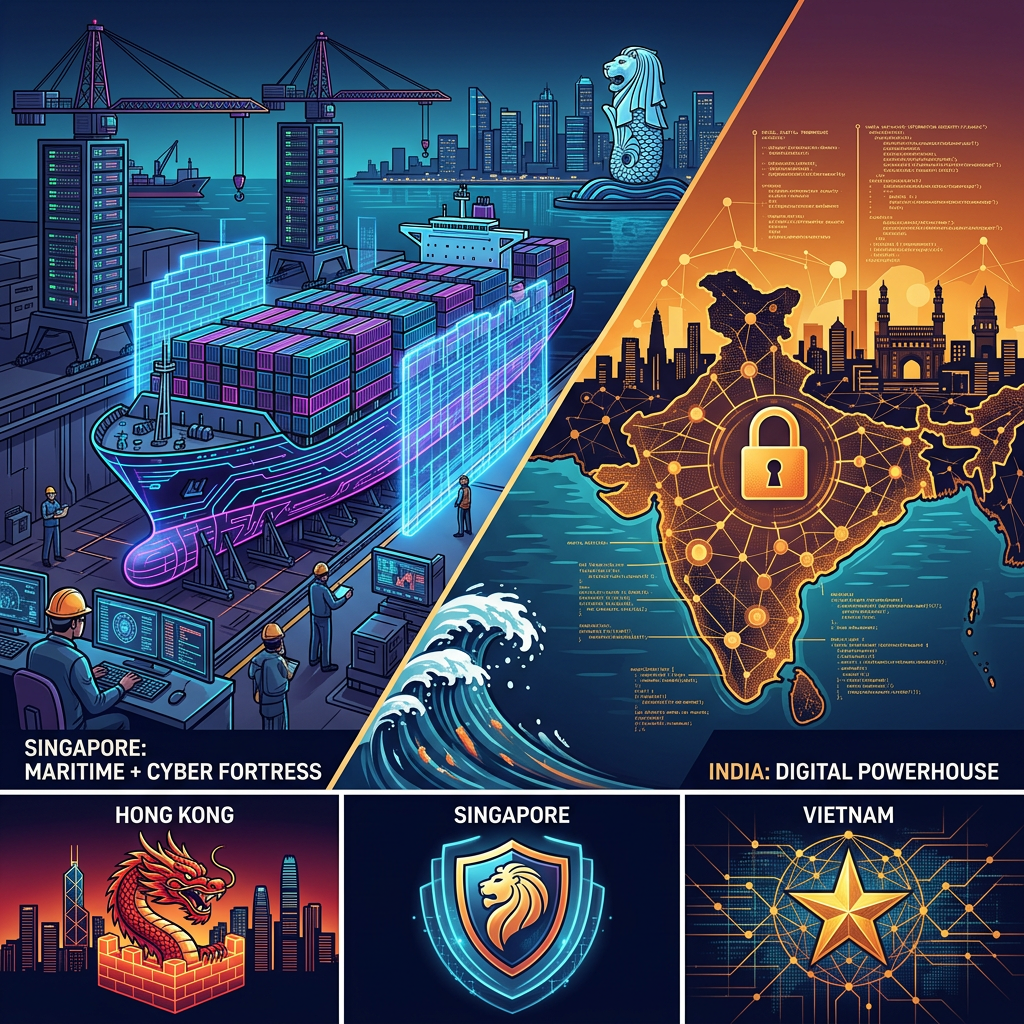
Several Asian economies have established more mature information security cultures by embedding cybersecurity into both corporate governance and national digital strategies. Singapore's Cybersecurity Act and Personal Data Protection Act (PDPA) require organizations to implement strong cyber controls, while the nation's Cyber Security Agency actively promotes cyber awareness and resilience across industries. Hong Kong's Personal Data (Privacy) Ordinance (PDPO) and increasing focus on operational resilience have encouraged financial institutions and enterprises to adopt proactive risk management practices. Vietnam, through its Cybersecurity Law and Personal Data Protection Decree, has accelerated investments in data protection and critical infrastructure security as part of its digital economy ambitions. Compared to these nations, India's regulatory landscape is evolving rapidly, but the overall security culture remains uneven across sectors, with large enterprises often demonstrating stronger cyber maturity than small and medium-sized businesses
India's rapid digital transformation, driven by fintech, e-commerce, cloud adoption, and government initiatives such as Digital India, has significantly increased the importance of information security. The introduction of the Digital Personal Data Protection (DPDP) Act, 2023, alongside sector-specific regulations from RBI, SEBI, IRDAI, and CERT-In directions, reflects the government's commitment to strengthening cyber resilience. However, despite advancements in regulatory frameworks, many organizations continue to view cybersecurity primarily as a compliance requirement rather than a business enabler. Challenges such as inconsistent security awareness, limited investment in cyber training, and fragmented governance structures continue to expose organizations to data breaches, ransomware attacks, and insider threats.
As cyber threats continue to evolve, compliance alone will not be sufficient to protect organizations. Indian businesses must move beyond a checklist-based approach and foster a security-first culture that emphasizes continuous employee awareness, executive accountability, risk-based decision-making, and proactive cyber governance. Integrating Governance, Risk, and Compliance (GRC) programs with cybersecurity operations can help organizations align regulatory obligations with business objectives while strengthening resilience against emerging threats. By learning from the structured cybersecurity ecosystems of Singapore, Hong Kong, and Vietnam, India has an opportunity to transform information security from a regulatory obligation into a strategic business advantage that enhances trust, protects data, and supports sustainable digital growth.
Several Asian economies have established more mature information security cultures by embedding cybersecurity into both corporate governance and national digital strategies. Singapore's Cybersecurity Act and Personal Data Protection Act (PDPA) require organizations to implement strong cyber controls, while the nation's Cyber Security Agency actively promotes cyber awareness and resilience across industries. Hong Kong's Personal Data (Privacy) Ordinance (PDPO) and increasing focus on operational resilience have encouraged financial institutions and enterprises to adopt proactive risk management practices. Vietnam, through its Cybersecurity Law and Personal Data Protection Decree, has accelerated investments in data protection and critical infrastructure security as part of its digital economy ambitions. Compared to these nations, India's regulatory landscape is evolving rapidly, but the overall security culture remains uneven across sectors, with large enterprises often demonstrating stronger cyber maturity than small and medium-sized businesses
India's rapid digital transformation, driven by fintech, e-commerce, cloud adoption, and government initiatives such as Digital India, has significantly increased the importance of information security. The introduction of the Digital Personal Data Protection (DPDP) Act, 2023, alongside sector-specific regulations from RBI, SEBI, IRDAI, and CERT-In directions, reflects the government's commitment to strengthening cyber resilience. However, despite advancements in regulatory frameworks, many organizations continue to view cybersecurity primarily as a compliance requirement rather than a business enabler. Challenges such as inconsistent security awareness, limited investment in cyber training, and fragmented governance structures continue to expose organizations to data breaches, ransomware attacks, and insider threats.
As cyber threats continue to evolve, compliance alone will not be sufficient to protect organizations. Indian businesses must move beyond a checklist-based approach and foster a security-first culture that emphasizes continuous employee awareness, executive accountability, risk-based decision-making, and proactive cyber governance. Integrating Governance, Risk, and Compliance (GRC) programs with cybersecurity operations can help organizations align regulatory obligations with business objectives while strengthening resilience against emerging threats. By learning from the structured cybersecurity ecosystems of Singapore, Hong Kong, and Vietnam, India has an opportunity to transform information security from a regulatory obligation into a strategic business advantage that enhances trust, protects data, and supports sustainable digital growth.